Vienna

Stephansdom · Hofburg Complex · Belvedere · The Opera House ·
Prater · Kunsthistorisches · Karlskirche · Burgtheater · Other Europe Country


Vienna has a population of just ovetr 1.5 milion and covers an area of 415 sq km (160sq miles). The River Danube flows through it and Danube Canal flows through the city center. It is the Capital of the Republic Austria of which it is also a federal state, and is the country's political, economic, cultural and administrative cebtre. At the heart of of Central Europe, it makes a good base from which to explore cities such Bratisava, Prague, Buda Pest, Zagreb, Salzburg and Munich.


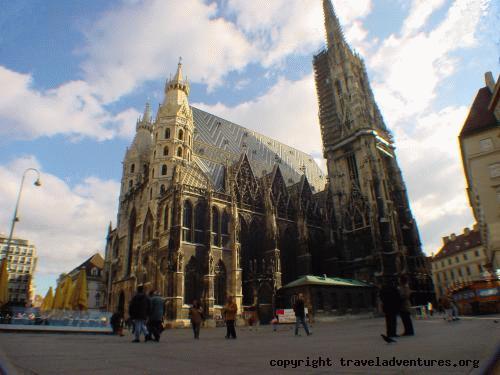
Stephansdom

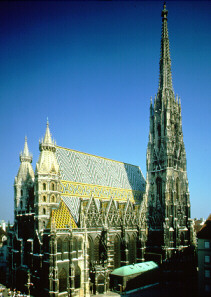
The Cathedral Saint-Etienne (Stephansdom) is the center of the life and the history of Vienna. It is built on the site of a Romanesque basilica (1147) which was at the time just apart from the fortifications. Two towers (opposite), known as of the Pagan ones, and the Western frontage appear among the vestiges of the original building. It is from 1359 that the current cathedral was raised in the Gothic style. The big tower of Saint-Etienne rises with 137 metres.


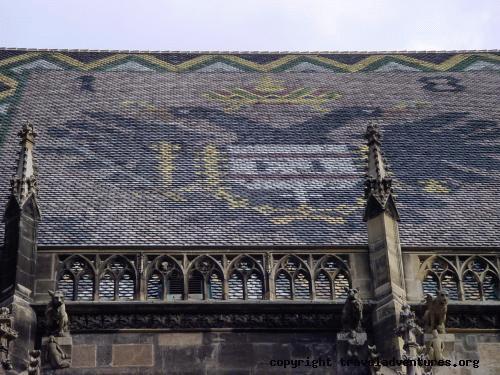
Tiled roof of the stephansdom


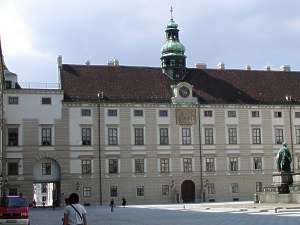
Hofburg Complex

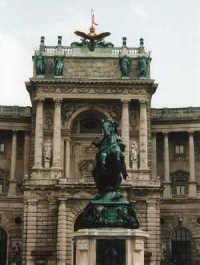
This is another one of Vienna's big attractions. And by big, we're talking scale. It encompasses six museums, a chapel, the president of Austria's offices, the national library, the famed Winter Riding School, a greenhouse, and a park. It will take two days to thoroughly see the place. The Hofburg Complex was built as the imperial home of the Habsburgs, and they lived there until 1918. The Kunsthistorisches Museum (Museum of Fine Art) has exhibits of ancient art, a collection of armor, even a collection of antique musical instruments. The Winter Riding School is where the Lipizzaner stallions are trained in the Spanish Riding School. It was designed by Josef Emanuel Fischer von Erlach, and built from 1729 to 1735. Inside two galleries surround the training ground, which is illuminated by two enormous chandeliers. But photography inside is not permitted. Most other buildings allow photography as long as the flash is turned off. There is also a butterfly aviary created out of greenhouses built from 1901-1907. Location: Central Vienna


Amalienburg in Hofburg


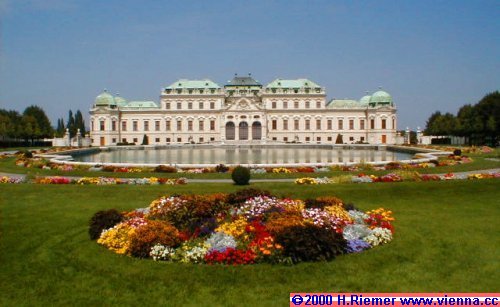
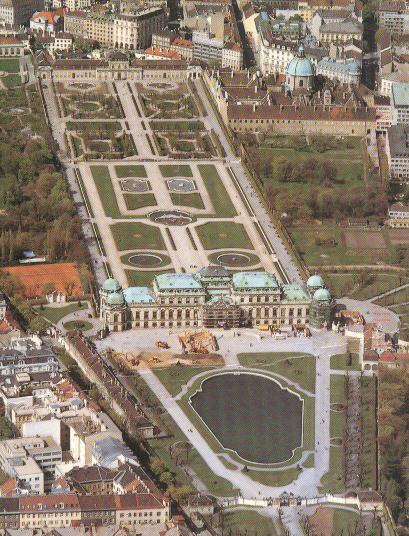
Belvedere

Built: 1714-1722 Designed by Johann Lukas von Hildebrandt The palaces of the Belvedere were constructed for Prince Eugene of Savoy, and served as his summer residence. The roof of the Upper Belvedere was designed to look like Turkish tents in honor of Prince Eugene's defeat of the Turks, driving them from the city in 1683. It also served as the home of Archduke Franz Ferdinand until he was assassinated. Unlike some other tourist attractions in Vienna that warn you when photography is not allowed inside, the Belvedere Palace has no signs. Or at least none that I saw. So consider yourself warned: you will get thrown out for snapping a few photos. Otherwise, this is one of the highlights of visiting the city. The Upper Belvedere is still used for formal state functions and balls. The Palaces and gardens are much larger than they look, and you could easily spend an entire day from sunrise to sunset appreciating the manicured grounds, the statuary, and the art of the Austrian Gallery (Österreichische Galerie). I recommend starting at the Upper Belvedere, and then walking downhill to the Lower Belvedere. The photos presented here are from October, 1999 when half of the Upper Belvedere was shrouded in plastic and scaffolding for renovation. So the photos you see are from the unsheathed part of the building. The Lower Belvedere is not so afflicted, and is also worth a visit. It contains the Österreichisches Barockmuseum, featuring baroque art from Viennese artists during the city's golden age. There is also the Orangery which is now home to the Museum of Austrian Medieval Art.


The Opera House

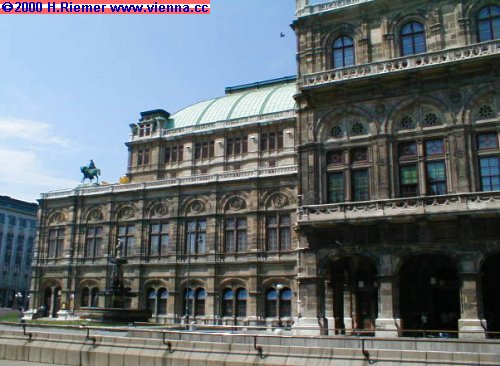
Vienna Opera house also known as State Opera was the first at the Ringstrasse buildings to be completed. It was opened in 1869 for the strains of Mozart's Don Giovanni. Built in neo-Renaissancestyle, it initially failed toimpressed the Viennese. Yet when it was hit by a bomb in 1945 and largely destroyed, the event was seen as a symbolic blow to the city. With a brand new auditorium and stage incorparating the latest technology, the Opera House was reopened ooon 5 November 1955 with a performance of Beethoven's Fidelio.


Prater-An oasis of pleasure

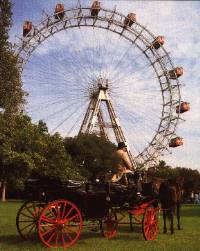
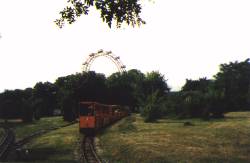
Many people regard the Vienna Prater as just another fun-fair. But it´s much more than that: it´s a Viennese institution, like the coffee houses or the Heuriger (wine taverns). Its landmark, and one of Vienna´s too, is the 65 metre high Giant Ferris Wheel. It towers over the 200 booths in the Prater, the ghost train, go-karts and grotto railways, the merry-go-rounds and fruit-machine halls, throwing and shooting galleries. The Prater has something to offer for the whole family: take a ride with the children on the fairy-tale railway, the children´s dodgems and the scenic railway. Plummet down the extra-long slides, laugh yourselves crooked, bent, fat or thin in the hall of mirrors, savour the romantic nostalgia of an old merry-go-round or the great variety on offer from the Prater caterers: from pickled gherkins to boiled beef.

The wonders of the heavens await you in the Planetarium. And in the Prater Museum you can re-live the greatest moments of this fun-fair. Incidentally: each booth in the Vienna Prater is an independent enterprise - which is why you don´t have to pay an admission charge to enter the Prater, and also why the various attractions in the Prater don´t have uniform opening times.

Ferris Wheel
Mini Railway


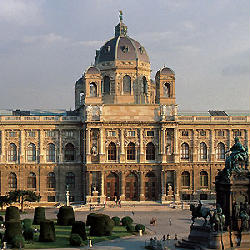
Kunsthistorisches

The newly constructed museum building in the Vienna Ringstraße was ceremoniously opened in 1891. For the first time, most of the imperial Habsburg collections were housed under one roof, the monumental building itself being conceived as a memorial to Habsburg patronage. The architects Gottfried Semper (1803-1879) and Karl von Hasenauer (1833-1894) designed the building in the style of the Italian Renaissance, establishing in the spirit of Historicism a link with an epoch of especial significance for the arts and sciences.

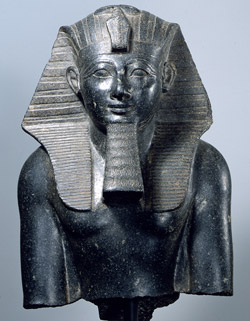
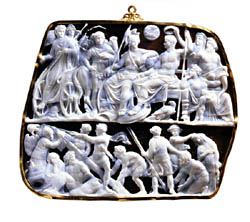
Some of the collection in Kunsthistorisches Museum :

King Thutmosis III
Gemma Augustea
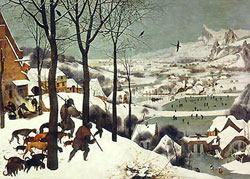
(painting)Hunters in the snow


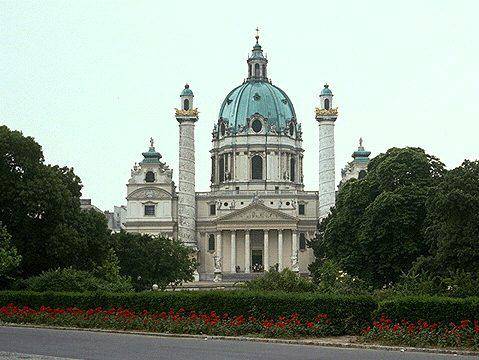
Karlskirche

Karlskirche (Saint-Charles church) is the most beautiful church baroque of Vienna, masterpiece of Fischer von Erlach, father and son. Charles VI made it build as a sign of gratitude at the end of the great plague in 1713 and it was dedicated to the patron of plague-stricken, the archbishop of Milan Charles Borromée. Its two immense columns are inspired by the trajan column of Rome and are decorated with spiral friezes which illustrate the life and the work of the lombardic saint.


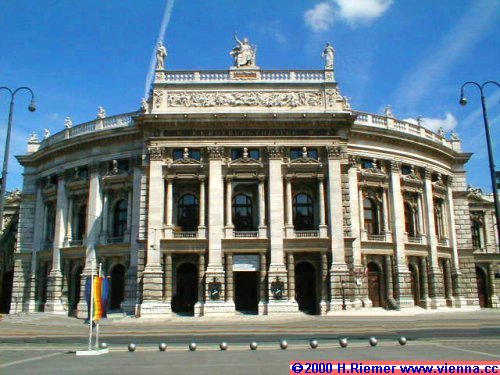
Burgtheater

The Burgtheater is the flagship of the 50 Viennese theaters and is considered the oldest and also one of the most influential theaters in the dramatic arts of the German-speaking countries. Its distinguished program comprises classical as well as. The magnificient staircase was designed by the Klimt brothers.


End of Page
Top · Stephansdom · Hofburg Complex · Belvedere · The Opera House ·
Prater · Kunsthistorisches · Karlskirche · Burgtheater ·