
|
|
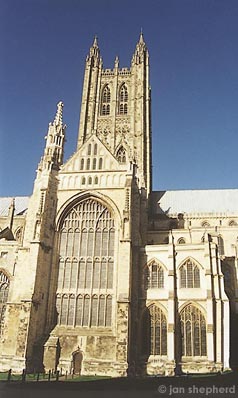 The most impressive and evocative, if not the most beautiful, cathedral in England is the seat of the Archbishop of Canterbury, the Primate of All England. Like most cathedrals, it evolved in stages and reflects a number of architectural styles, but the final result is one of the world's great buildings. The ghosts of saints, soldiers and pilgrims fill the hallowed air, and not even baying packs of French children can completely destroy the atmosphere. After the martyrdom of Archbishop Thomas à Becket in 1170, the cathedral became the centre of one of the most important medieval pilgrimages in Europe, a pilgrimage that was immortalised by Geoffrey Chaucer in the Canterbury Tales. Canterbury itself was severely damaged by bombing in WWII and parts of the town have been insensitively rebuilt, but it still attracts flocks of tourists, just as it has for the past 800 years - though numbers may decrease now pilgrims are charged a US$5 fee to enter the cathedral.
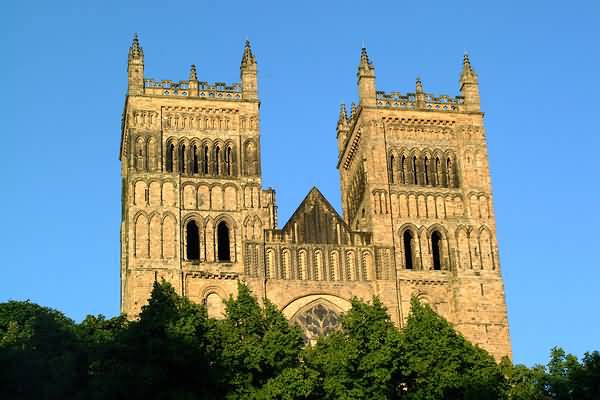 Durham is the most dramatic cathedral city in Britain. It straddles a bluff surrounded on three sides by the River Wear and is dominated by the massive Norman cathedral which sits on a wooded promontory, looking more like a time-worn cliff than a house of worship. The cathedral may not be the most refined in the land, but no other British cathedral has the same impact. The cathedral shares the dramatic top of the bluff with a Norman castle and the University College, while the rest of the picturesque 'city' (population 38,000) huddles into the remaining space on the teardrop-shaped promontory.