|
|
There are a few cities located on Jutland. Alborg, the capital of Nordylland Country, is located on the Lim Fjord and is a major industrial and cultural center, as well as a commercial seaport.With a current population of about 155,000. Alborg manufactures machinery, chemicals, cemet, ships and textiles. Arhus, is Denmark's second largest city.Arhus Bay, the city has a population of close to 250,000. Arhus is also one of Denmark's lodest cities. Esberg, Denmark's largest fishing port, is located in south Jutland on the Noth Sea. With a current population of 80,000. Frederica, a seaport on the southeastern Jutland, has a population of 46,000. Horsen, is a port on the Horsens Fjord on the east coast of central Jutland. With a population of 55,000. Kolding, is located in south central Jutland on the Kolding Fjord, and inlet of Lille Baelt. Kolding has a population of 56,400. Randers, population 62,000,is a seaport on east Jutland at the mouth of the Gudena River.
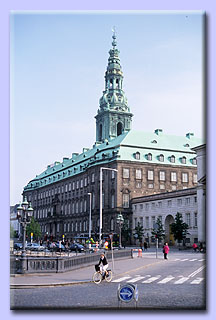
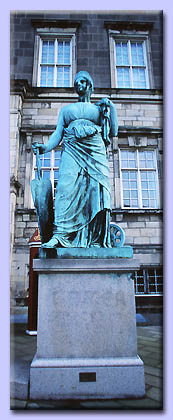
 Jutland, Denmark - Christianborg
|
|
|
Slot is Danish for Castle, first off. As such, there are many of them dotting the face of this country,
more per square kilometer than most other European countries, I would say. Christianborg Slot is part of
Slotsholmen, and is the seat of Denmark's government. This castle, or more accurately, palace, is the
centerpiece of it. It was built in 1730, and through several fires and restorations, it has achieved it's
present appearance.
It's worth noting that underneath the building shown here, are the
excavated foundations of the two castles that preceeded this one- the 12th century Absalon's
Fortress, and Copenhagen Castle, from about 1400 or so.
Jutland, Denmark - Helligaandskirken (Chruch Of The Holy Ghost)
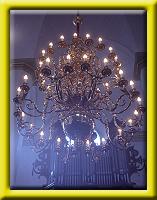
The historical associations here begin with the first bulding on the site, a 14th-centery convent church, which was rebuilt in 1732. The burial chapel of the Griffenfelds, family of Count Peder Griffenfeld (1635-99), is here, and there is a memorial to the Danish patriots who died during the German occupation, 1940-45. Since the war an annual memorial service has been held here on may 5.
Jutland, Denmark - Holmens Krike
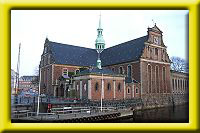
The tombs of two of Denmark's naval heroes, who distinguished themselves in action against Sweden, are in a chapel of this church: Neils Juel, active in the war of 1675-77, and Peder Tordenskjold, who lived early in the 18th century. Also here is the grave of the composer-conductor Neils Gade (1817-90). The building has undergone several alterations since it was converted from an anchor forge in 1619 by King Christian IV.
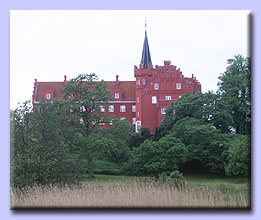
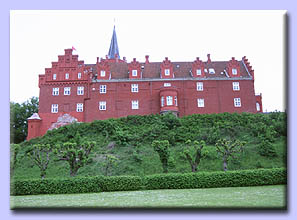
Zealand, Denmark - Tranekaer slot
|
|
This castle, though nice,was not so open to the public. Oh, they will take your money to get a glimpse of it, but you cannot go inside and it's difficult to get any good shots for free. The left and middle shots were only viewable from a park that had an entrance fee, while the right shot was taken from a free area. I had a basic problem in that the family who lives here wants to capitalize off the obvious interest of the public, but they don't want to open up the actual castle or closer grounds- a few small changes would give much better and more direct views of the front of the castle (the left two pictures are actually the front and main grounds).
Jutland, Denmark - Ringsted Kirke
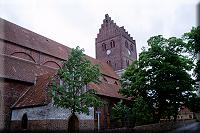
The graves of more than 20 kings and princes are here, though none of the original tombs remain. Among the royal remains are those of Waldemar I (the Great), king of Denmark 1157-82; Waldemar II,king 1202-41 (Ploughpenny), king 1241-50; Eric Moendved, king 1286-1319; and Prine Canute Lavard (1094-1131).