|
|
The capital of Spain since 1562, is located on the geographic center of the Iberian Peninsula.
Because of its central location and high altitude, the climate of Madrid is characterized by warm
dry summers and cool winters. Madrid is a city of great monuments. Among its highlights are
the medieval center dating back to the Habsburg Empire and the Prado Museum.
But Madrid is not just a cultural destination. It is also a lively metropolis with many pubs, cafes,
discotheques and nightclubs open late into the night. Don't be surprised if you get stuck in a
traffic jam at four in the morning, and the people you meet are not necessarily going off to work.
What more need be said about one of the finest capital cities of Europe...
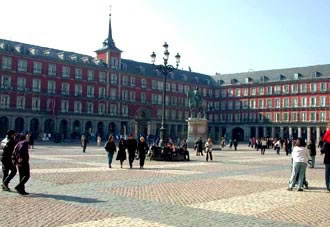
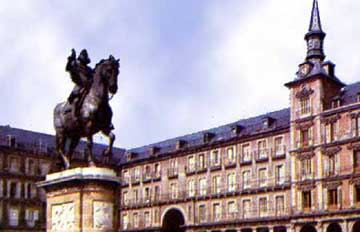
 Madrid, Spain - Plaza mayor
|
|
Philip III had built this impressive square between 1617 and 1619, to give additional prestige to his kingdom. The buildings are mostly Renaissance style, in the center there is a statue of the king by Juan de Bolonia and Pietro Tacca. During 17th century this square was the scenery of theater performances and bullfights, and served as meeting-place of the Gremios, the associations of craftsmen. In 1790 the Plaza Mayor was almost completely destroyed by a fire, but rebuilt lateron.
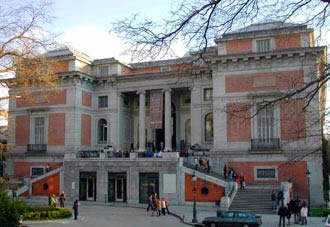
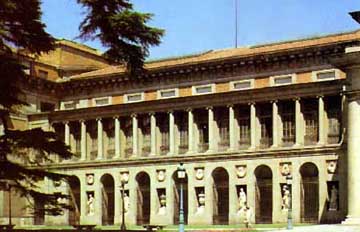
Madrid, Spain - Museo del Prado
|
|
|
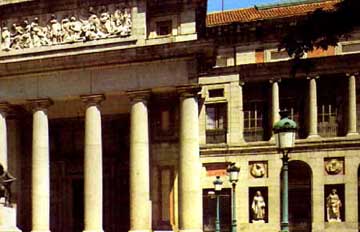
Perhaps the most beautiful neoclassic building of all Madrid. Built in 1785, it was intended to be a museum of natural history. Having been used as an arsenal during the wars against Napoleon, it became Madrid's Museum of Art in 1819.
Madrid, Spain - Plaza de cibeles
|
|
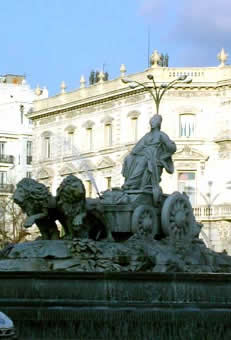
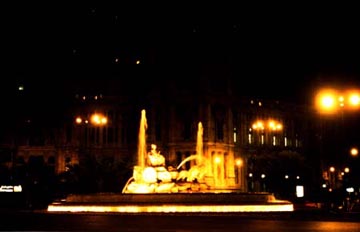
It is one of the city's most impressive squares, is ringed by distinctive buildings, including the 19th- century Banco de Espane and Madrid's main post office, with sculptures on its white facade.
Madrid, Spain - Parquee del retiro
|
|
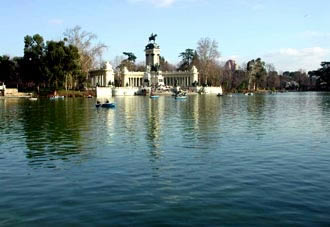
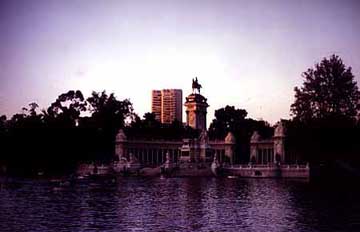
It has leaty paths and avemies, and a boating lake overlooked by a majestic colomade. It is an ideal place in which to relax between visits to the great art gallaries and museums of Bourbon Madrid.
Madrid, Spain - Palacio real
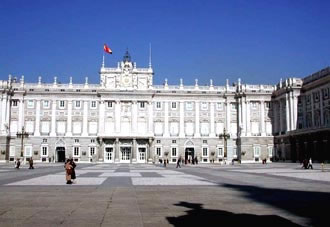
Madrid's Royal Palace is an impressive example of classisistic italian baroque style. Construction was begun under Philip V by the architects Juvara, Sabatini and Sachetti. Charles III was, in 1714, the first king to have his residence here. In the interior of the palace we find numerous precious rooms, specially remarkable is the Throne Hall. Worth visiting are as well the gardens, Jardines de Sabatini and Campo del Moro.