|
|
| LUZERN |  |
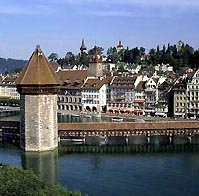
Constructed in
the 14th century, the Chapel Bridge is named after nearby St. Peter’s chapel. The paintings that were
added in the 17th century illustrate scenes of the City’s history. The attached octagonal Water Tower
- Lucerne’s trademark - was build around 1300.Historical, frescopainted buildings border the
old city on the right bank of the Reuss at a few picturesque squares. Especially attractive are the Weinmarkt, the Hirschenplatz and the Kornmarkt
square which features the Town Hall and beautifully painted Pfistern guildhall.
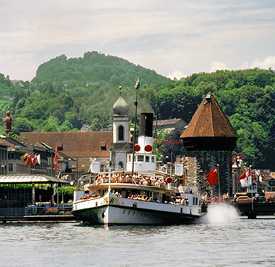
Year-round connections to all holiday resorts and mountain rail and cable systems around the lake. Departures in Luzern to Flüelen and Alpnachstad every hour (season). Attractive roundtrips lasting one to six hours. Gastronomy on all boats. Many special cruises like the famous Fondue-Boat, Folklore-, Breakfast- and Sunset-Dinner-Cruises. Place:Lucerne and all lakeside resorts around Lake Luzern.
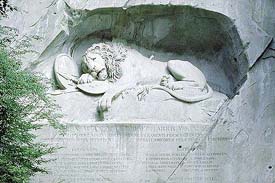
The Glacier Garden is an outstanding natural monument with gigantic glacial potholes and erratic blocks from the Ice Age 15,000 to 20,000 years ago, and with fossilized shells and palm leaves from 20 million years ago. Museum with the oldest relief map of Switzerland, a historical model of the city and a fun hall of mirrors. Just a few steps away, you find “The dying Lion of Lucerne”, which Mark Twain described as the “saddest and most moving piece of rock in the world”. The Lion Monument was hewn out of natural rock in memory of the heroic death of the Swiss mercenaries at the Tuileries in 1792. |
 BACK TO MAIN